Generative AI & Agents
- LangChain
- LangGraph
- LlamaIndex
- RAG
- OpenAI API
- Claude API
- Prompt Engineering
- LLM Fine-tuning
- Hugging Face
I'm Ismail Qayyum — software engineer, deep learning researcher, and builder of production-grade AI systems. I design agentic LLM workflows, end-to-end data pipelines, and neural networks that move real metrics for real businesses.

 Python
 PyTorch
 TensorFlow
 Spark
Spark Airflow
 AWS
AWS MongoDB
 Neo4j
Neo4j Docker
 Kubernetes
 FastAPI
 Redis
Redis Hugging Face
 OpenAI
 Anthropic
 Git
Git GitHub
 Linux
LinuxI graduated from FAST-NUCES with a B.S. in Artificial Intelligence and have spent the past year shipping production AI at Disrupt.com (formerly Gaditek), where I architect Medallion-Architecture pipelines that move over a million events a day across Secure.com's 10,000+ asset security platform.
Before that, I built autonomous LangChain/LangGraph agents in live client environments at Imperium Dynamics, and led computer-vision research at FAST that produced a published Zenodo dataset now cited in autonomous-vehicle simulation work.
My focus is the unglamorous middle of the AI stack: pipelines that don't break, agents that recover from their own mistakes, and APIs that make production data actually usable. I care about latency, observability, and the moment a feature ships — not the demo.
Raw telemetry from S3, OpenSearch, Neo4j — 1M+ events/day per tenant.
Append-only landing zone. Spark ingestion jobs orchestrated by Airflow.
Schema-aligned, deduped, type-safe. LLM-driven self-correction across 300K+ records.
Business-grade aggregates & metrics, indexed for query latency. 45% faster.
MongoDB indexed views + FastAPI REST endpoints powering analytics dashboards.
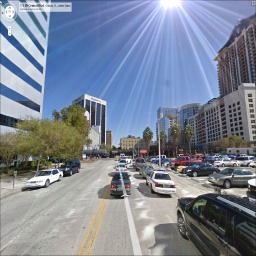
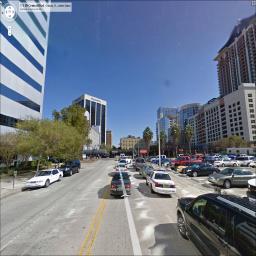
Extended a diffusion model with stage-wise diffusion, adaptive conditioning, and attention to recover clean images from real-world degradations — built for autonomous-vehicle sensor simulation. Designed a novel composite loss (Contextual + Perceptual + L1) that measurably improved reconstruction fidelity over the L1-only baseline.
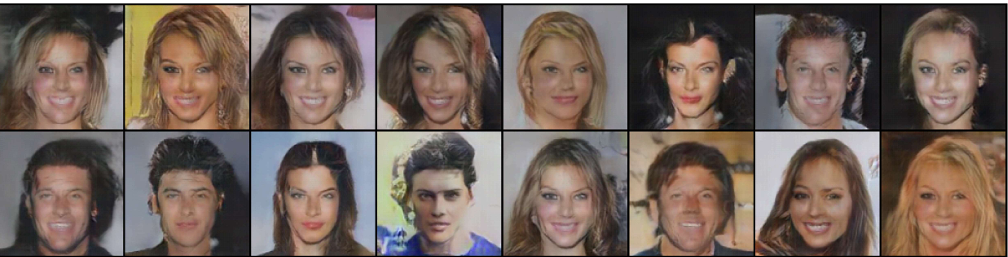
Trained DCGANs from scratch on the CelebA dataset at both 32×32 and 128×128 resolutions. Generator (transposed-conv stack) learns to synthesize face crops from a 100-D Gaussian noise prior; the discriminator (strided-conv stack) judges authenticity in a min-max game until the generator's samples become indistinguishable from real faces.
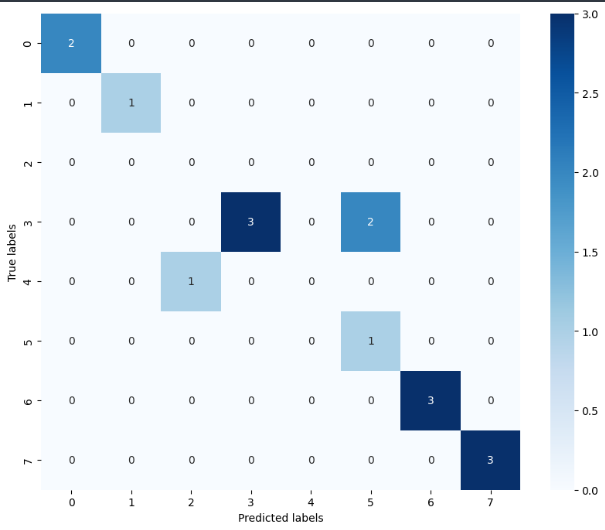
Designed a custom convolutional architecture from scratch in PyTorch to classify CIFAR-10 across 10 categories — airplane, automobile, bird, cat, deer, dog, frog, horse, ship, truck. Iterated through regularisation, augmentation, and architectural changes to push test accuracy to 81%.
Excerpt from the Teaching Assistant Agent — a typed LangGraph node that grades a single answer against a rubric, with structured output and stateful retries.
from langgraph.graph import StateGraph
from langchain_anthropic import ChatAnthropic
from .state import GradingState
from .prompts import build_grading_prompt, parse_grader_output


def grade_answer(state: GradingState) -> GradingState:
    """Score one student answer against the rubric."""
    llm = ChatAnthropic(model="claude-opus-4-7", temperature=0)
    prompt = build_grading_prompt(
        question=state.question,
        rubric=state.rubric,
        answer=state.answer,
    )
    score, feedback = parse_grader_output(llm.invoke(prompt))
    return {**state, "score": score, "feedback": feedback}


graph = StateGraph(GradingState)
graph.add_node("grade", grade_answer)
graph.add_node("verify", verify_against_rubric)
graph.add_conditional_edges("verify", route_on_confidence)
graph.set_entry_point("grade")
agent = graph.compile()Multi-tenant Medallion-Architecture data platform handling 1M+ daily events per tenant from AWS, OpenSearch, and Neo4j. Owns the path from raw security telemetry to indexed Mongo views powering dashboard analytics across 10,000+ AWS assets.
Autonomous LLM agent that grades student assignments end-to-end — parses PDFs, evaluates answers against rubrics, and generates structured feedback reports. Eliminates hours of manual grading per session.
Computer vision dataset of 19,000 degraded/clean street-view image pairs for autonomous-vehicle sensor research. Published on Zenodo and cited as Qayyum, I., Badar, A., & Rizwan, A. (2024).
Production LangChain + FastAPI agents with chained LangGraph multi-step reasoning and a Redis-backed stateful memory layer — deployed in live client environments at infrastructure-grade reliability.
Notebooks, agents, infra experiments — pinned and updated regularly.
Qayyum, I., Badar, A., & Rizwan, A. (2024). Computer-vision dataset of 19,000 degraded/clean street-view image pairs.
DOI: 10.5281/zenodo.14552482PyTorch implementation of autoencoders from scratch — published in the AI Monks publication.
Read on MediumDeep dive into neural-network architectures and forward propagation.
Read on MediumI'm selectively available for AI engineering work — agentic LLM systems, data platforms, and ML automation. Drop a line and let's talk.